


Is Hell filled with people who make bad decisions or just people with bad genes? Dr. Kathryn Paige Harden hasn’t visited Hell, but she does study the inheritance of sin— how antisocial or self-destructive behaviors are passed down through our genes.
Harden’s last book The Genetic Lottery stirred up outrage with the idea that genes can predict bad behavior. Most progressives accept the idea that sexual orientation is genetic, so it doesn’t make sense to send people to “conversion” therapy to make people un-gay. But it makes almost everyone squeamish to think that your tendency for infidelity or even violence might be heritable. These are sinful behaviors that might land you in Hell or in the electric chair.
In her new book, Original Sin, Harden tackles the idea of sin, both through her science and through grappling with her religious upbringing. Here’s our interview with her:
Your title invokes “original sin” — a framework where wrongdoing is inherited rather than chosen — but you want readers to come away less punitive, not more. That cuts against two opposite worries about genetic explanations for bad behavior: that they license fatalism (”why try?”) or that they license harsher treatment (”lock him up!”). How do you want readers to hold the science without tipping into either?
As you describe, we can tell multiple stories in response to genetic explanations of bad behavior, and these stories can pull differently on our intuitions about whether and how much someone should be punished. One is an essentialist story: Someone is, in Shakespeare’s word, “a devil, a born devil, on whose nature Nurture could never stick.” Another is a determinist story: Someone wanted to be good, but their genes made them do it. Yet another story is dualist and rejects the very idea that genes can influence bad behavior: Either something is bad, or it’s biological, but it can’t be both. All these stories are vast over-simplifications.
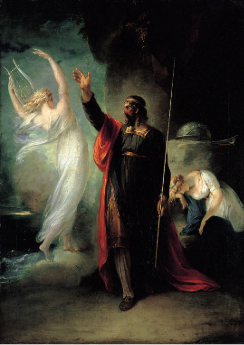
To avoid telling an oversimplified story about genetics, I think it helps to know where these stories come from, and just how old they are. My book traces the roots of our contemporary stories about genetics to debates within the early Christian church about sin and moral freedom. At the turn of the 5th century, the Roman Emperor had converted to Christianity, and the early Christian church was adapting to its new role as ally to, rather than subverter of, imperial power. It was in this unique historical moment that St. Augustine proposed the doctrine of original sin, which was both essentialist and determinist: Humans were thought to physically inherit a fault in their nature that completely corrupted them and made them deserving of punishment. As the religious scholar Elaine Pagels has described, this theological innovation was very attractive to a church searching to justify its increasing power in the newly Christian state. But it wasn’t without controversy. The monk Pelagius was an outspoken critic of the doctrine of original sin, arguing that something could not be sin if it were also part of nature.
The concept of “original sin” is a hotly debated topic in both academia and religion: Churches that follow this understanding teach it as the result of Adam's disobedience in the Garden of Eden which led to the fall of humanity and an inherited condition of sin.
“Humans were thought to physically inherit a fault in their nature that completely corrupted them and made them deserving of punishment.”
We have absorbed these ideas about original sin for 1500 years, whereas we have only known about the structure of DNA for 70 years. No wonder we keep trying to graft our new, weird, wonderful scientific knowledge onto our more ancient ideas. But close attention to scientific results threatens all our tidy narratives, whether they be essentialist, determinist, or dualist. As I write in Chapter 1 of my book, “I want to show you how if you travel east far enough you end up west, how every sinner was once a child, how every human who feels herself to be a causal agent is a consequence of forces, including genes, beyond her control. How bad genes can be good; how nature and nurture collapse into each other; how punishment is just as much part of our evolutionary inheritance as the sins that are punished.”
Your last book put you at the center of a debate about whether behavior genetics can be progressive — criticized from the left for giving ammunition to hereditarians, and from the right for being too egalitarian. Original Sin shifts the lens from public policy to intimate moral life. Do you expect that shift to change who pushes back hardest, and who you most hope to reach?
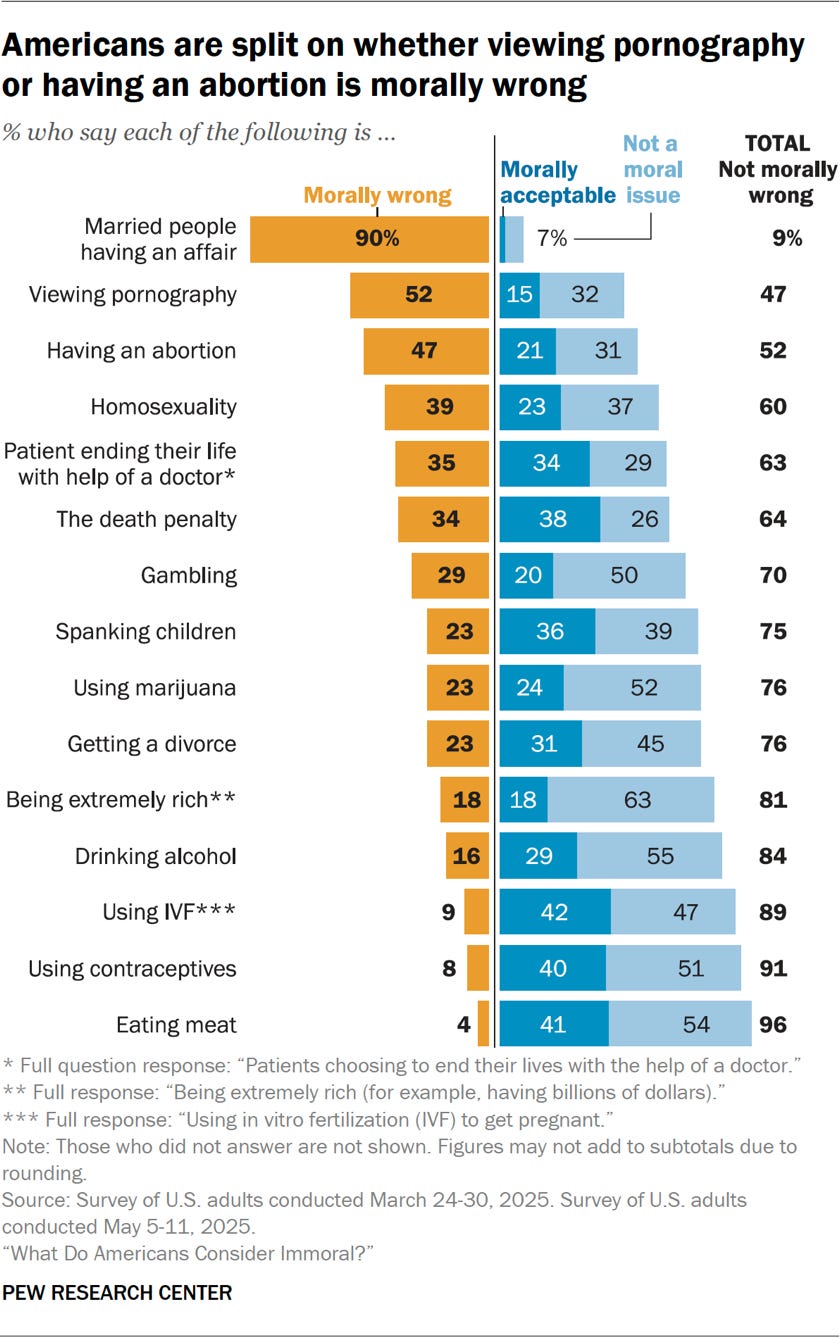
You’re right that Original Sin is much more concerned than my first book (The Genetic Lottery) with intimate moral life, but one thing I hope readers get from the book is the continuity between the private and the public, between the intimate and the institutional. The book argues, for example, that support for spanking children at home and support for mass incarceration and the death penalty share an ideological throughline: A belief that inflicting pain is the only right response to an inherent wickedness. The United States is exceptionally punitive in both its family life and its public policy, and I don’t think that’s a coincidence.
As for who pushes back, I’ve come to expect two kinds of resistance. One fears that any claim about biology shaping behavior is necessarily a step toward eugenics, so my books get read as hereditarianism with a progressive disguise, with every anti-eugenic argument being read as further proof of my dissembling. The other fears that attention to biological constraint will dissolve accountability and let wrongdoers and freeloaders off the hook. The Genetic Lottery and Original Sin drew both types of resistance. Any book that says humans have natures and that our response to human nature is a moral and political choice will always be legible to each side as a defection to the other.
“I’m explicitly asking the reader to consider how these ideas about inheritance, sin, and punishment play out with their kids, their partners, their religious communities. . .”
What’s different about Original Sin, compared to my first book, is the texture of the pushback; it can feel less abstract and more personal because I’ve brought so much of my own story into the book. When pushback feels personal, I try to remind myself: I wanted people to take the book personally! I’m explicitly asking the reader to consider how these ideas about inheritance, sin, and punishment play out with their kids, their partners, their religious communities, and some people don’t want ideas to stray so close to the bone.
But making the connection between the institutional and the intimate, and bringing my own personal story into the book, also reaches people who would probably never pick up a standard academic science book. My own book club, which is all women, has been meeting every month for 20 years, and we almost never read nonfiction, much less science nonfiction. But we read Original Sin last month. I was so nervous to discuss it, but to my delight I barely said a word for much of the meeting. Instead, the other women shared their own intimate stories—being the victim of a crime, struggling to be in relationship with an addicted family member, deconstructing their childhood religious upbringing—and talked about how the ideas in the book related to their actual lives. And isn’t that what we want our scholarship to do, ultimately? I want readers to feel like they’ve been a little stretched, intellectually speaking, and to find that they now have more space, more freedom, more flexibility in how they perceive and interact with their world.
When someone we love hurts us — a parent’s addiction, a partner’s betrayal, a child who keeps making the same mistakes — we’re caught between the moral intuition that they chose this and the knowledge that their biology shaped the choice. Your subtitle promises a “future of forgiveness.” Did writing this book leave you more forgiving of wrongdoing, or less — and did that shift show up in your own life?
Writing Original Sin made me realize that my conception of forgiveness was still shaped by my upbringing as an Evangelical Christian, and specifically, by my childhood belief in heaven and hell. Whether you are sent to heaven or hell—whether you receive divine punishment or divine forgiveness—is an absolutely final and mutually exclusive judgement. It’s all or nothing, forever, with no movement between. But, in researching my book, I encountered scholars and communities who conceptualized forgiveness as a social practice that dances with punishment, entwined with it in different configurations that change over time. Forgiveness and punishment are not opposites that one must choose between. The legal scholar Martha Minow put it this way in her book, When Should The Law Forgive?: “Neither innocence nor guilt, all or nothing, fully offers the justice or the better future that individuals and societies need and deserve.”
The other shift is that I now hold less of a “feelings-first” understanding of forgiveness. Evangelical Christianity emphasizes a personal relationship with Jesus Christ as the only path to moral transformation. One is saved by faith, by genuinely feeling something to be true. Good works will follow from faith, like fruit from a well-planted tree. When I prayed the Lord’s Prayer (“Forgive us our trespasses, even as we forgive those who trespass against us”), I considered the font of forgiveness to be an inward change of my heart: First, I would feel belief in God, and then He would forgive me, and in forgiving me, He would change my heart so I will feel forgiveness towards others. Although I left the Evangelical world in graduate school, I still implicitly carried a model of forgiveness that emphasized my inner emotions.
Now, I no longer see forgiveness as, first and foremost, a change of heart. I see it as an ongoing practice of restraint, demanding in its simplicity: To forgive is not to act as if I’m entitled to harm someone. I might be angry, resentful, furious, and I might consider myself totally justified in feeling that way—but if I’m forgiving you, I will rip up the permission slip of “they deserve to suffer” in how I treat you.
“. . . if I’m forgiving you, I will rip up the permission slip of ‘they deserve to suffer’ in how I treat you.”
All of that to say, the book didn’t make me more or less forgiving—it changed what I think forgiveness is. How this shift has shown up in my personal life is that I no longer feel the same pressure to decide, once and for all, forever and ever, whether someone “deserves” forgiveness. I no longer feel like I’m waiting around for an inner transformation that cleanses me of anger and resentment. There’s a form of therapy for depression called behavioral activation, which emphasizes doing things before you feel like doing them—and the feelings and thoughts, very often, follow suit. You’re not going to wait to feel like exercising; you put on your shoes and walk outside. Forgiveness, understood this way, isn’t easy, exactly, but it is something I can actually practice. Today, am I going to act like you deserve to suffer, or am I not?
If a reader finishes your book and wants to carry one idea into their next hard conversation, what’s the one shift in perspective you hope they bring?
The person across from you is neither a born devil, nor a disembodied rational chooser, nor a hapless mechanism, and neither are you. You don’t have to adjudicate how much someone deserves to suffer versus how much they deserve to get off the hook. Adjudicating that is impossible anyway, because there is no clear place where constraint ends and choice begins. You don’t have to choose, once and for all, between punishment and forgiveness. You don’t have to wait to feel differently before acting differently. You have to decide how you will act today—and this will require your creativity. If you decide to rip up the permission slip of “I’m entitled to hurt you because you hurt me,” what possibilities are left? What actions best honor the inherent human dignity of the other person, and your own?
I was just listening to her guest appearance on Love Factually--so excited to read this new book!
You may want to check the book "The Genetics of Original Sin" (1975, by Nobel prize Christin De Duve). Here's an NIH review: https://pmc.ncbi.nlm.nih.gov/articles/PMC3117416/